
Parliamentary Group for Future Generations March 2026 Meeting Summary
Background
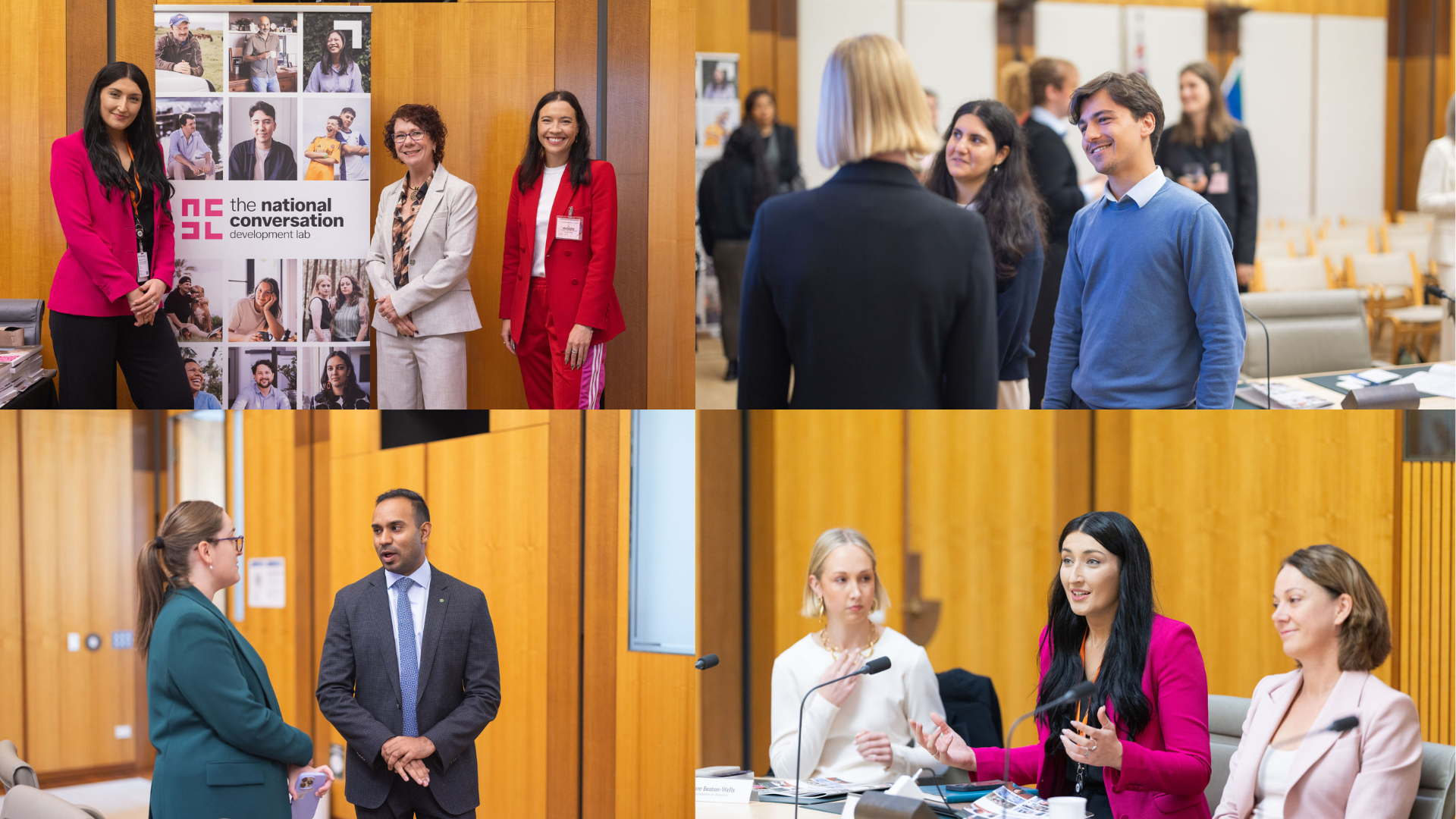
The Australian Parliamentary Group for Future Generations convened its first meeting of 2026 at Australian Parliament on 24 March, co-chaired by Dr Sophie Scamps MP, Ms Ash Ambihaipahar MP and Senator Maria Kovacic. The session brought together political representatives, civil society leaders, youth advocates, First Nations voices and academics to mark the formal opening of the National Conversation Development Lab.
The Lab’s opening was accompanied by public release of both the Building the Australia We Want Report, setting out the Lab’s roadmap for the next 18 months, and Portraits of Our Future, visual storytelling research that highlights the human costs of political short-termism and the urgency for a National Conversation in Australia.
The Lab is built on a central premise: that doing this poorly would be worse than not doing it at all. It exists to develop the infrastructure, methodology and community partnerships required to deliver a National Conversation that is truly inclusive, durable and capable of changing how Australia builds solutions to its most complex challenges. That ambition requires design rigour, genuine resourcing and a commitment to reaching the Australians most affected by short-term governance.
Structured Dialogue: Lessons From Thirty Years of Citizen Engagement
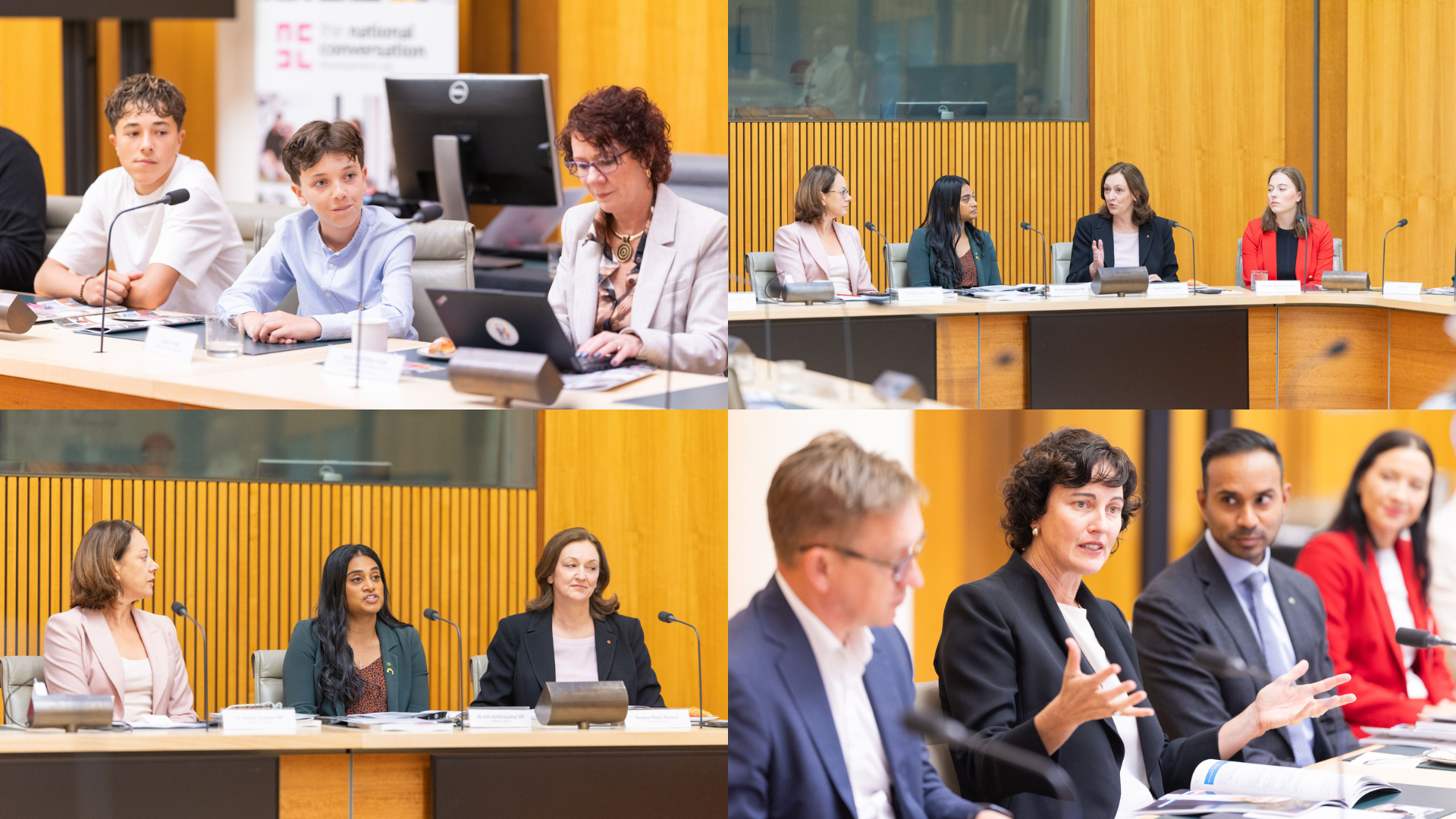
The meeting opened with candid reflection from political and civil society leaders on why many civic engagement attempts in Australia and around the world have fallen short. The consistent insight emerging from this reflection was that failure in this space is rarely about intent and almost always about planning, resourcing and respect for community. Processes fail when superimposed from above, when language is disconnected from how everyday citizens engage, when funding is too thin and when participants receive no meaningful feedback that their contribution influenced change. The Lab represents a novel approach. No comparable international model exists where this level of design rigour has been invested before launching a National Conversation at full-scale. It was framed by leaders as a genuine national-building undertaking, requiring the same level of seriousness governments bring to major institutional reform.
Three imperatives were identified as foundational to the Lab’s success:
Clarity of purpose: Be explicit about what the Lab is doing, what it is seeking and how it will involve people at every stage.
Adequate resourcing: Civic engagement is chronically underfunded, A thin budget guarantees corners are cut, communities are missed and follow up collapses.
Feedback and accountability: The most powerful thing an engagement process can offer is evidence that participation changes something. Closing that loop is not optional.
Open Discussion: Building The Conditions For Success
Following structured dialogue, the meeting moved into open discussion of the conditions required for the Lab’s success. A central design challenge highlighted is the need to build a process that is future-focused and generative without becoming too abstract to be useful. The risk is falling between two poles: questions so broad that nearly everyone agrees, and conversations so policy-specific that they lose the capacity to inform long-term governance.
Design rigour and the Shared Inquiry Framework
The Shared Inquiry Framework (SIF) is the methodological response to this challenge. It establishes a consistent set of standards for what good long-term decision-making requires across any policy domain and constructs questions that can be localised to specific communities and contexts. Whether it is housing, technology, health or climate, the SIF ensures all contributions feed into a nationally coherent policy narrative.
The Lab’s 18 month design process is organised around developing and testing the SIF so it is ready to operate at scale in a fullscale National Conversation.
Emerging Themes
Sustaining momentum and demonstrating impact An 18 month design process risks losing relevance in a world driven by short-term cycles. The discussion highlighted that pilot conversations should begin within four months, testing dimensions of the National Conversation model so that the Lab generates real activity well before any fullscale launch. Communities who participate must see quickly and visibly that their input changed something, or the goodwill the Lab depends on won’t last.
Engaging children and young people
Deep disenchantment among young Australians, including primary school-aged children, means the Lab cannot wait for them to come to it. Engagement must go to where young people already gather, in formats that respect how they choose to engage rather than mapping their views onto predetermined categories.
First Nations voices and structural accountability
The Lab must build genuine accountability to First Nations leaders into its design from the outset. This is not a courtesy but a structural commitment that must hold across the full lifecycle of the process. The intention is not to fully resolve First Nations questions but to ensure they are never avoided or treated as secondary.
Class, accessibility and who is in the room
The Australians most harmed by shorttermism are not yet in the room, and a National Conversation that only reaches those already engaged will reproduce the very inequities it is trying to overcome. The Lab will include a dedicated relationship building and design phase before substantive model development begins to ensure the communities it most needs are included in shaping design from the outset.
The role of business
Business participation is both practically necessary and structurally risky. The Lab needs resourcing, but business involvement can affect outcomes regardless of governance design. The question is not whether business participates, but how the Lab ensures that participation never translates into disproportionate influence
Strategic Considerations
The session concluded with a shared recognition that the Lab is attempting something genuinely new: not another consultation but an effort to build enduring civic infrastructure that enables Australia to regularly convene around decisions that shape its future. Participants identified several strategic imperatives for the months ahead.
Design before you reach out: The three month coalition and design phase must be used to genuinely prepare the Lab for community engagement. Investing in design rigour now safeguards the integrity of everything that follows.
Diversify the design team: The people currently shaping the Lab do not yet represent the communities most marginalised by short-term governance. That must change before substantive model development begins.
Build in feedback loops from the outset: Closing the loop with participants, quickly, visibly and in plain language is foundational to the Lab’s legitimacy and to the trust it depends on to function successfully.
Hold the anti-partisan line: The Lab’s value rests entirely on its credibility as an antipartisan space. That will require ongoing discipline, including resisting pressure to advocate for specific policy positions.
Prepare for hard conversations: The discussions the Lab needs to facilitate, on class, First Nations justice, climate and the redistribution of civic power, will not be comfortable. Creating conditions for them to be engaged with directly, in productive and respectful ways, is the Lab’s central design challenge.